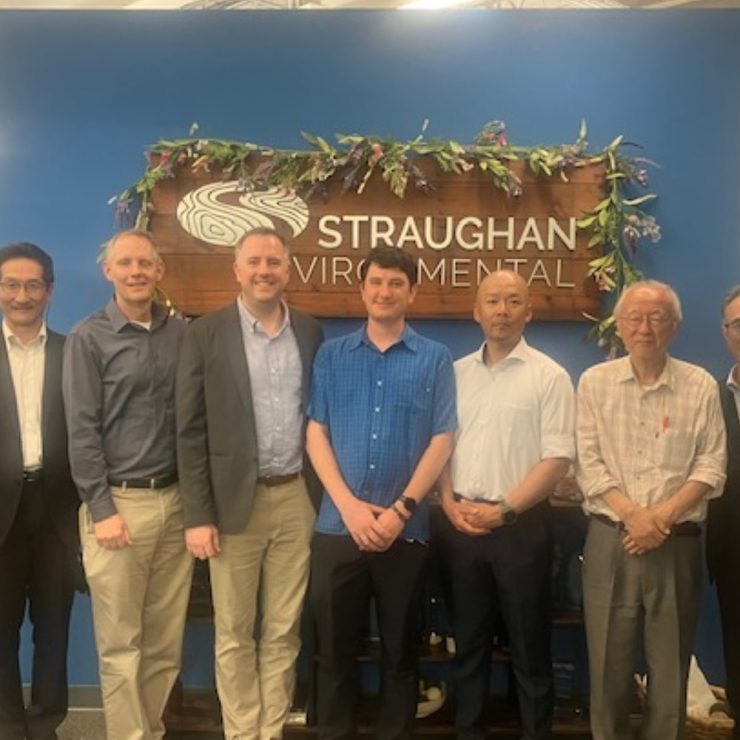
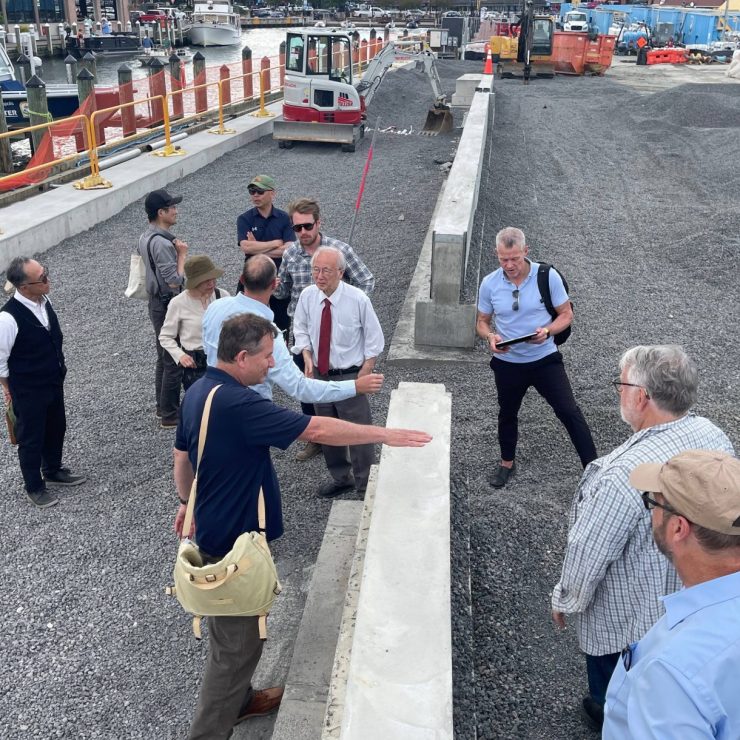
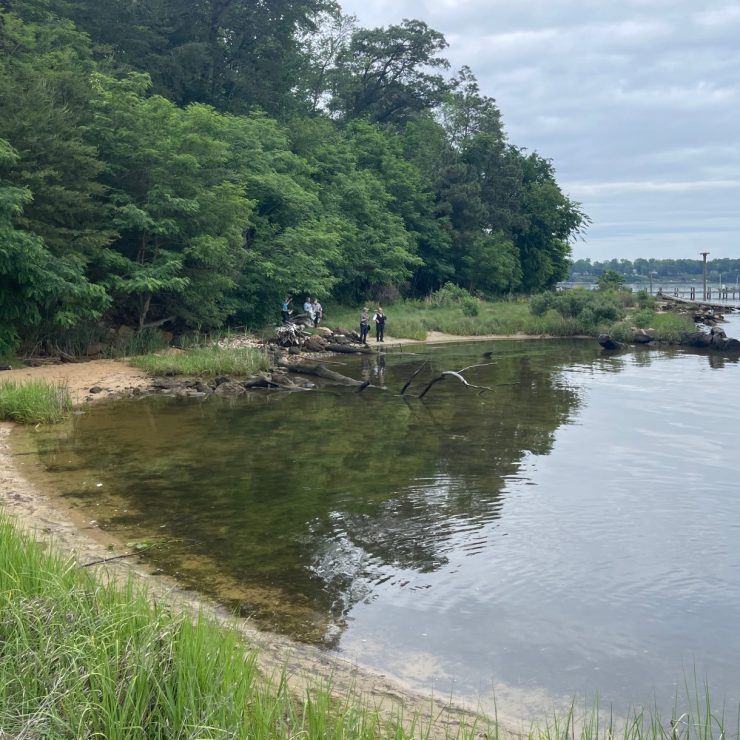
Straughan was honored to welcome a delegation from Japan during their recent visit to the United States! Led by the Ecosystem Research Institute of Japan, the group included members from Tokyo Metropolitan University, Iwate Medical College, and Kochi Prefecture. The trip was focused on studying nature-based solutions (NBS) and other ecological restoration practices being used in the Chesapeake Bay region to help support similar conservation and restoration efforts in Japan’s Tokyo Bay. Over the course of four days, the team visited and explored 14 sites covering a range of projects such as stream restoration, living shorelines, and floating wetlands; met with approximately 48 professionals across public, private, non-profit, and academic sectors; and attended 10 presentations on the Chesapeake Bay cleanup effort, with topics including broad-scale restoration programs, project monitoring results, laws and regulations, fisheries management, and long-term trends in the Bay’s health.
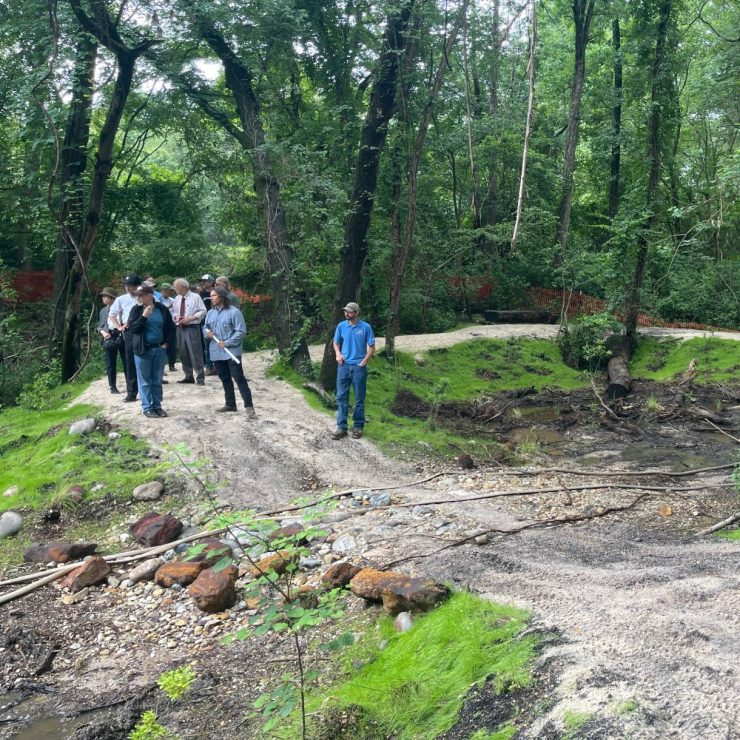
Our Director of Ecological Restoration and Full Delivery Solutions, Drew Altland, led a tour of the Israel Creek Restoration Site near Walkersville, MD to give the delegation a first-hand look at a stream restoration project that Straughan is currently working on. Restoration was performed at Israel Creek to meet the Maryland State Highway Administration’s (SHA) Total Maximum Daily Load (TMDL) water quality goals for reducing streambank erosion and associated nitrogen and phosphorus pollution contributing to the degradation of the Chesapeake Bay. Straughan’s work on this project includes stream monitoring, post-construction monitoring adjacent to wetlands, and wetland creation monitoring at the site, which includes approximately 3,171 linear feet of stream with roughly 35 structures and attendant floodplain wetlands. The group also visited our Columbia, MD office to meet with several members of Straughan’s ecosystem restoration team. This meeting provided the opportunity for further discussion around the benefits of NBS, design approaches, and current efforts being deployed in the Tokyo Bay.
The visit was featured by NHK-WORLD-JAPAN, highlighting the growing interest in nature-based solutions throughout Japan, and how these approaches can help communities improve disaster resilience and strengthen the health of the Tokyo Bay. Check out the article and watch a clip from the news special below!
Article: Japan team visits US to study ways to restore Tokyo Bay’s natural environment
Video: NHK WORLD-JAPAN NEWSーHarnessing Nature to Prepare for Disasters
For Straughan, this was a meaningful opportunity to share local restoration experience as a part of a larger international conversation. While the Chesapeake and Tokyo Bays face different ecological conditions, the use of nature-based solutions can help both areas address challenges related to water quality, flooding, habitat, shoreline erosion, and resilience. We are proud to support this exchange of knowledge to help advance ecological restoration outcomes around the world and look forward to seeing how lessons learned from the Chesapeake Bay watershed continue to inform practices and conversations beyond our region in the future!
Special thank you to Keith Binsted for helping organize the visit!